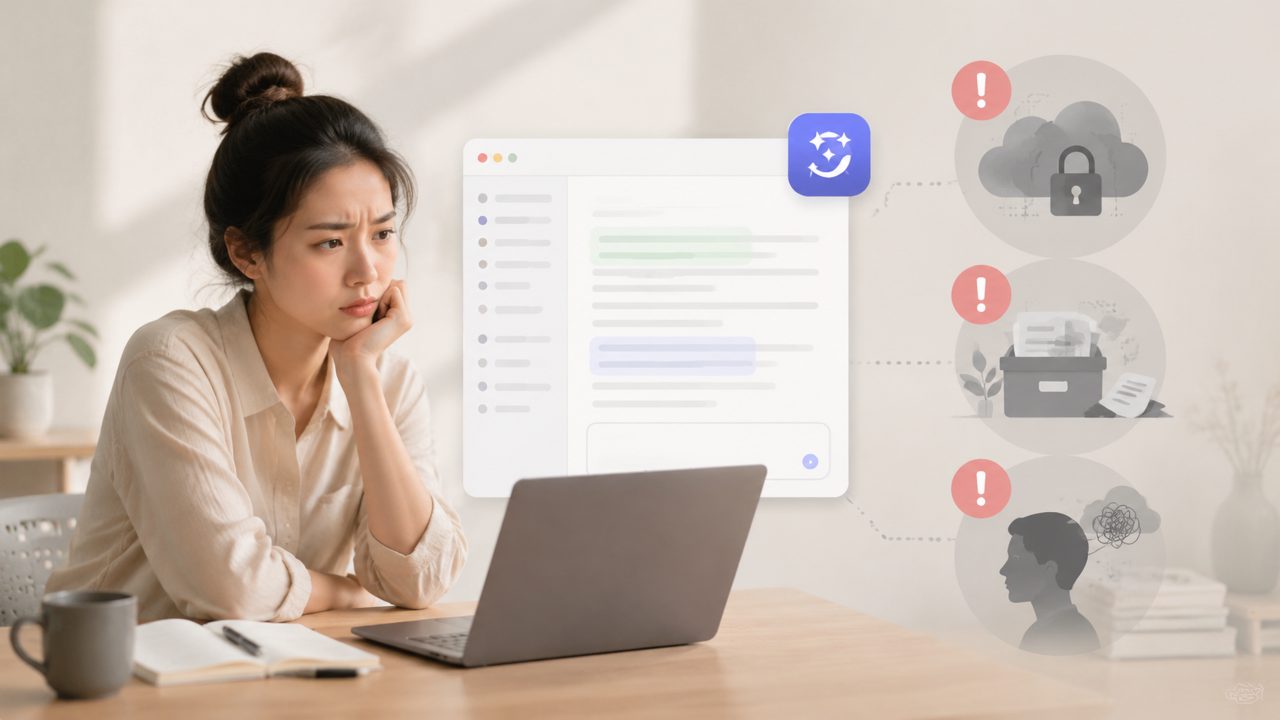
You finally found what looks like the best free AI note taking app 2026 should be – something called Writing Space. Clean interface, promises AI summaries, handles meetings and research. But after a week of using it, some cracks start to show. Here are the gotchas nobody warns you about.
You think it replaces every note-taking tool
The first mistake is assuming Writing Space works the same way for everything. The AI does a decent job with short meeting notes – quick bullet points, action items. But if you throw in a dense research paper or a long lecture transcript, the summaries start missing nuance. I tested it with a two-hour class recording. The AI condensed it into three paragraphs, but it skipped the professor’s key qualifiers and two important asides. The underlying engine, tidenote, is solid, but the output needs manual fixes.
The Journal feature isn’t what you expect
There’s a section called Journal. I assumed it was a personal diary-style notebook. It’s not. It’s a chronological list of all your AI-generated notes, with no folder structure. If you don’t manually tag each entry, finding an old note becomes a search-and-scroll problem. The Anchor Text linking inside Journal also felt half‑baked – it jumps to a related note sometimes, other times it just refreshes the page. That inconsistency is annoying when you’re trying to connect ideas across sessions.
Free limits are tighter than they seem
Writing Space markets itself as a free app. And it genuinely is – no paywall for basic note capture. But the AI summarization runs on credits. You get a decent amount each month, but heavy users (like students recording every lecture) hit the cap before mid‑term. I had to switch to manual notes for the last two classes of the week. The alternative? Competitors like beanly offer more generous free tiers, but their transcription accuracy is lower. Tradeoff.
The 小片刻 mode is a neat idea but easy to misuse
There’s a quick‑capture mode called 小片刻 (meaning “a short moment”). I tried it during a brainstorming call, thinking it would log one‑liners. Instead it started transcribing everything, which filled the note with filler words. I had to clean up two minutes of “ums” and “likes” afterward. Now I only use it when I have a clear sentence ready. Also, the “Notes” area inside a meeting record doesn’t sync well with the 小片刻 feed – they’re separate lists, so you can easily lose a thought if you don’t consolidate manually.
Where it actually works
Despite the hiccups, Writing Space is fine for quick meeting recaps and personal idea dumps. The AI is fast and the interface stays out of your way. But if you need deep research organization, cross‑document linking, or diary‑style personal notes, you’ll run into those rough edges. I still use it – just not for everything. Keep your expectations grounded, tag everything early, and watch your credit balance. That’s the real best free AI note taking app 2026 advice: understand where the shortcuts end and where you still need your own thinking.
Comments
Leave a Comment